Food
How I Finally Made Nut Milk That Actually Tastes Good
My exact recipe for homemade almond and cashew milk — after a lot of trial and error, this is the version that actually works.
How I Finally Made Nut Milk That Actually Tastes Good
by Veronika | Nourish Move Radiate
I want to be honest with you — making good nut milk at home is harder than the internet makes it look.
I struggled with this for a long time. Too bitter. Too watery. Strange aftertaste. The kind of result that makes you give up and reach for a carton. I kept trying because I knew exactly what was in the carton version — stabilizers, gums, seed oils, and often very little actual nut — and I didn't want that in my matcha every morning.
Eventually I found a combination that works. Really works. The kind of nut milk that makes you wonder why you ever bought it in a carton.
Here's exactly how I make it.
The Recipe — Almond or Cashew Milk
This recipe works for both. The process is identical — only the nut changes. Cashew gives you something creamier and richer. Almond is lighter and slightly more delicate. I make both depending on what I'm in the mood for.
You'll need:
1 cup raw almonds or raw cashews
3 cups filtered water
½ cup shredded coconut
1 teaspoon coconut oil or avocado oil
1 dried date
A pinch of salt
Muslin cloth or a fine mesh sieve
A blender
Step 1 — Soak the Nuts
This step is non-negotiable and it's where most people go wrong by skipping it.
Soak your nuts in water for at least 4 hours — overnight is even better. Soaking breaks down phytic acid, which is what makes raw nuts hard to digest and contributes to that bitter, astringent taste. After soaking, drain and rinse them well before blending.
Don't skip this. It makes a significant difference to both taste and digestibility.
Step 2 — Peel the Almonds (Optional But Worth It)
If you're making almond milk and you have the time, peel the almonds after soaking. The skins slip off easily once they've been soaked — just squeeze each almond between your fingers.
I don't always do this because it takes time. But when I do, the difference is noticeable — the milk is smoother, less bitter and has a cleaner, sweeter flavour. If taste is your priority that day, peel them. If you're in a hurry, skip it — the milk will still be good.
This step doesn't apply to cashews, which have no skin to remove.
Step 3 — Blend
Add your soaked nuts to a blender with:
3 cups of filtered water
Half a cup of shredded coconut — this adds a subtle creaminess and a gentle natural sweetness that makes a real difference
A teaspoon of coconut oil or avocado oil — for a silkier texture
One dried date — just one, for a very gentle sweetness without any sugar
A pinch of salt — this is the step most people miss, and it's transformative. Salt doesn't make it taste salty. It balances everything and brings the flavour forward.
Blend on high for a full minute until completely smooth.
Step 4 — Strain
Pour the blended mixture through a muslin cloth or a fine mesh sieve into a bowl or jug. If you're using a muslin cloth, squeeze it well to get every last drop of milk out.
Don't rush this step — a proper strain is the difference between silky milk and gritty milk.
Step 5 — Store
Pour into a clean glass bottle and store in the fridge. It keeps well for 3 to 4 days.
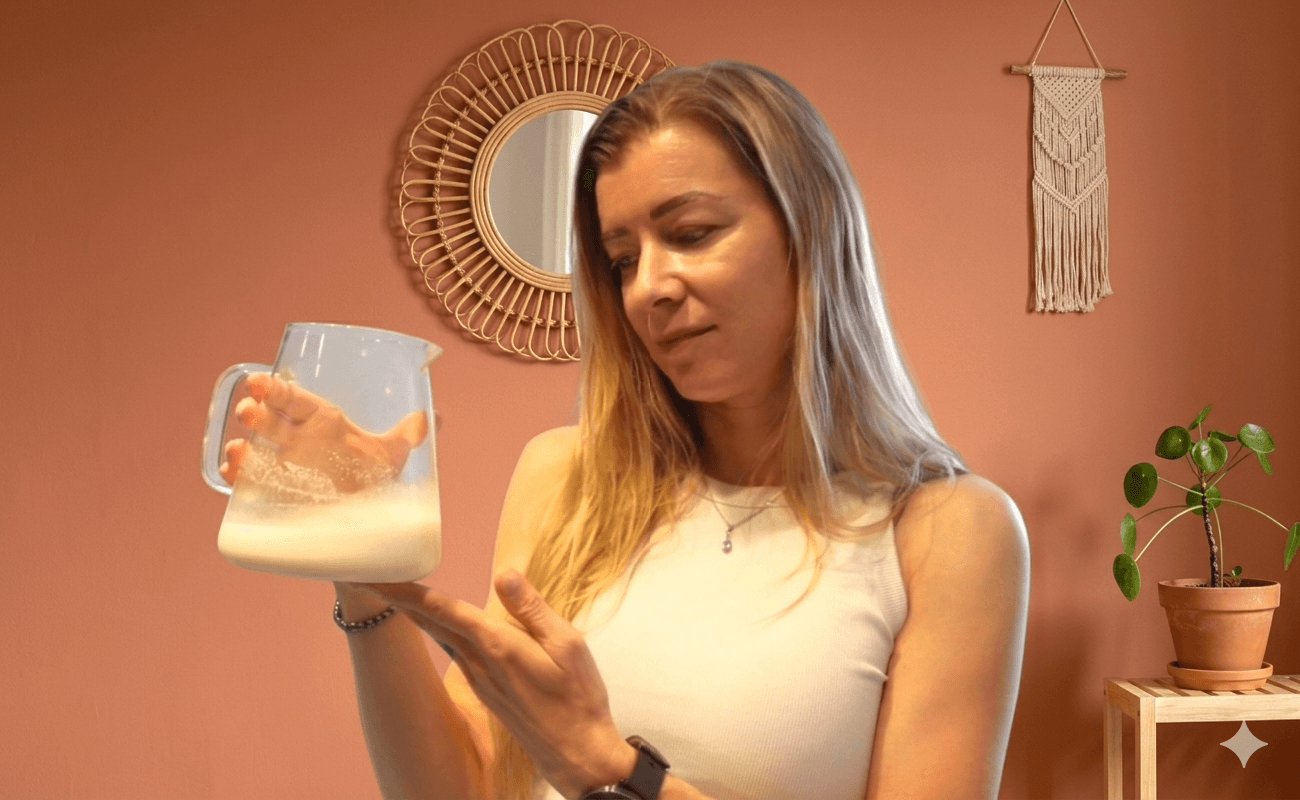
Always shake the bottle well before using — nut milk separates naturally as it sits, which is completely normal and actually a sign there are no artificial stabilizers in it.
One More Thing — Strain Again When Pouring
When I pour my nut milk into my matcha, I strain it again through a small sieve directly into the cup. This takes two seconds and gives you an incredibly smooth, barista-quality result. If you've ever wondered why your homemade nut milk doesn't behave like the café version in hot drinks — this is the step that changes it.
Why I Make My Own
I'm allergic to dairy, which means finding a plant milk that's genuinely clean and genuinely tasty has been important to me for years. Most commercial nut milks contain surprisingly little nut — sometimes as little as 2% — padded out with water, thickeners and oils I'd rather not have daily.
When I make my own I know exactly what's in it. One cup of real nuts. Clean water. A little coconut. A date. A pinch of salt. That's it.
The taste, once you get the recipe right, is incomparably better than anything from a carton. And once you've had your matcha with real homemade almond or cashew milk, going back feels impossible.
Find my matcha morning ritual and the other recipes I make from scratch in the Recipes section.